
Buying a first car for under £2,000
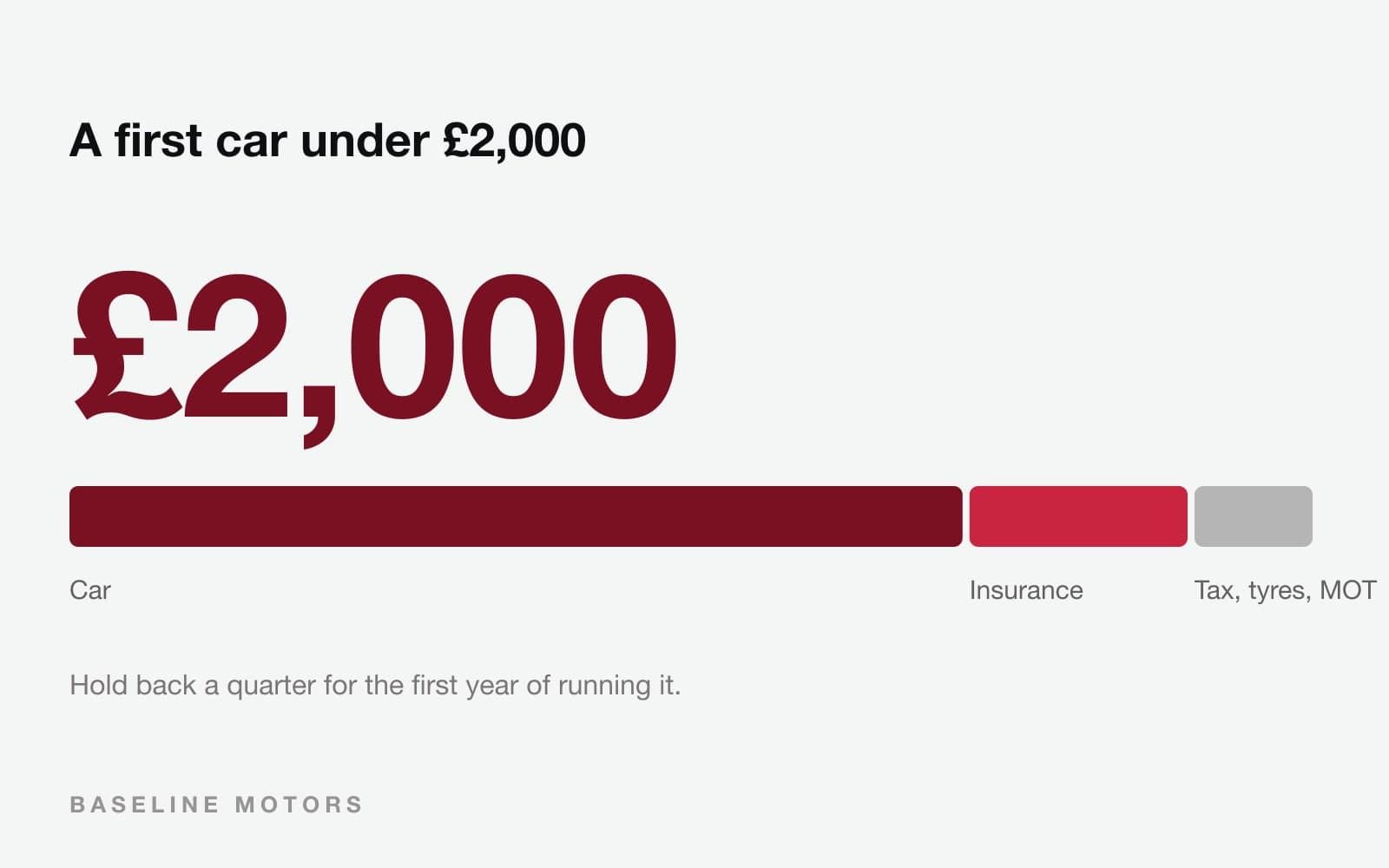
On a first car the insurance often costs more than the car. Get quotes before you choose, hold back a quarter of the budget for running costs, and worry about rust rather than scratches.
Buying a first car for under £2,000 is a different exercise from buying a newer one. The margins are thin, the cars are old, and the biggest cost is usually not the car at all.
Here is how to spend that budget well.
Insurance first, car second
On a first car the insurance frequently costs more than the car. For a seventeen-year-old it can be several times more.
So do this in the right order: pick two or three cars you like, get a quote on each, then decide. Not the other way round. A £1,500 car you cannot insure is worth nothing, and finding that out after you have paid is a bad afternoon.
Insurance group matters more than price here. A car in group 3 and a car in group 15 can cost the same to buy and hundreds apart to insure.
What else you have to pay for
Budget for these before you commit to the car:
- Insurance — get real quotes, not estimates
- Road tax — on some older cars this is £300+ a year. Check the exact figure for that registration, because the system changed in 2001 and again in 2017
- Fuel — an older petrol doing 35mpg costs meaningfully more to run than a newer one doing 55
- A service and a set of tyres — assume you will need one or both in the first year
- MOT — if it has less than six months left, that bill is coming
A useful rule: hold back around a quarter of your budget for the first year of running costs. Spending every penny on the car itself is the most common mistake.
What to look for in the car
At this money you are not buying perfection. You are buying something safe that will not surprise you.
A long MOT. Six months minimum, twelve if you can. It is the cheapest form of reassurance available.
A readable MOT history. Free at gov.uk. Look for consistent mileage, advisories that got fixed rather than repeating, and no gaps.
Rust, not scratches. A scuffed bumper costs nothing and does not matter. Corrosion on the sills, arches or subframe is what ends a cheap car, and it is not economic to fix.
Service history. Any is better than none.
Cold start. Start it from properly cold and listen. Most problems announce themselves in the first two minutes.
What not to worry about
- Cosmetic marks. On a £1,500 car, kerbed alloys and stone chips are normal. Paying extra for tidy ones is paying for someone else's respray.
- High mileage on its own. 120,000 well-serviced miles beats 60,000 neglected ones.
- Older shape. The previous generation of the same car is often mechanically identical and thousands cheaper.
Cars that make sense at this money
Look for common, simple, cheap to insure and cheap to fix. Small petrol hatchbacks with a big parts supply — the sort of car every garage has seen a hundred times — rather than something interesting with a specialist bill attached.
Avoid, at this budget: complicated diesels doing short journeys (the DPF will find you), anything with air suspension, and premium cars at suspiciously low prices. A £1,800 luxury saloon is a £1,800 car with £600 services.
Buying from a dealer versus privately
Privately is cheaper. But buy from a dealer and you get rights under the Consumer Rights Act: the car must be of satisfactory quality, fit for purpose and as described, and for the first six months a fault is presumed to have been there when you bought it.
Buy privately and you get almost none of that. The car only has to be "as described". Everything else is your problem the moment you drive away.
On a first car, that difference is usually worth the extra few hundred pounds.
What we do
We sell cars from £1,000, and we do not pretend they are something they are not. Every one gets serviced, gets at least six months MOT, gets its safety items measured, and gets undersealed. Every listing shows the full MOT history and what is not perfect about that particular car.
We also list the insurance group and the road tax where we have them, because on a first car those are the numbers that decide whether it is affordable — not the price on the windscreen.